


Tevijja Sutta (DN13): The Discourse on the Threefold Knowledge — The Path to the Company of Brahmā
Can anyone show you the way to a place they have never seen?
Two young brahmins, Vāseṭṭha and Bhāradvāja, come to the Buddha with a quarrel: each says that his own teacher has declared the only straight path to the company of Brahmā. The Buddha does not choose between the teachers. He asks a different question — has any brahmin, any teacher, any teacher’s teacher, or any of the ten ancient sages who composed the hymns ever seen Brahmā face to face? The answer is no.
From that answer the whole discourse unfolds. The Buddha compares the brahmins to a line of blind men, each holding on to the one in front; to a man who longs for a woman he has never seen; to a man building a ladder to a mansion he cannot point to; and, three times over, to a man on the bank of the river Aciravatī who wants to reach the far shore — by calling to it, in chains, or wrapped up and lying down. Then he sets the qualities of Brahmā beside the qualities of the brahmins and asks, five times: does it fit, does it agree? And he sets a monk who lives in boundless friendliness, compassion, altruistic joy, and equanimity beside Brahmā, and asks the same five questions again.
In this episode, Alexander and Serene walk through the Tevijja Sutta, the thirteenth discourse of the Dīgha Nikāya, in the way the Theravāda tradition has always read it: the root text first, then the commentary and sub-commentary where they deepen what the text says — why the Buddha made Vāseṭṭha affirm his claim three times, the commentary’s story of the blind men and the rogue, the five mental hindrances behind the five questions about Brahmā, what “action done within limits” means, and what became of the two young men after the discourse ended.
The question the discourse leaves with the listener is not whom you call to. It is what you are becoming.
From the PaliVerse Project — paliverse.org. Read the full sutta there in all three of its traditional layers, and ask your own questions about it.
Support this work: paliverse.org/donation
Topics: Tevijja Sutta (DN 13) · Dīgha Nikāya / Digha Nikaya · Long Discourses of the Buddha · Pāli Canon · Theravāda Buddhism · Brahmā · brahmavihāras (divine abodes) · loving-kindness (mettā), compassion, altruistic joy, equanimity · the five hindrances
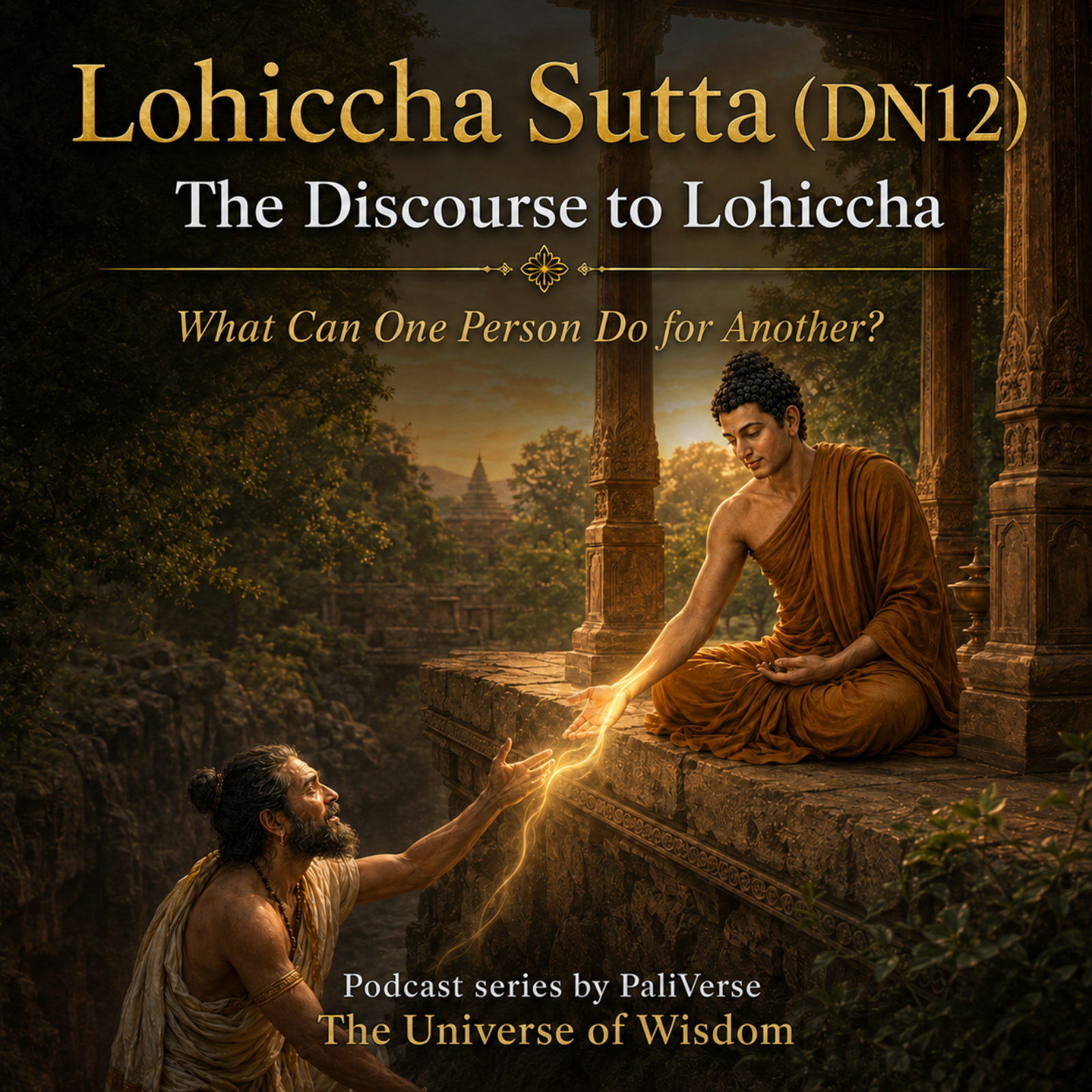
Lohiccha Sutta (DN12): The Discourse to Lohiccha — What Can One Person Do for Another?
If you discovered something that genuinely transformed your mind—something that made you calmer, wiser, and freer—should you share it with others? Or should you keep it entirely to yourself?The brahmin Lohiccha believed that anyone who attained a wholesome state should tell no one. What can…
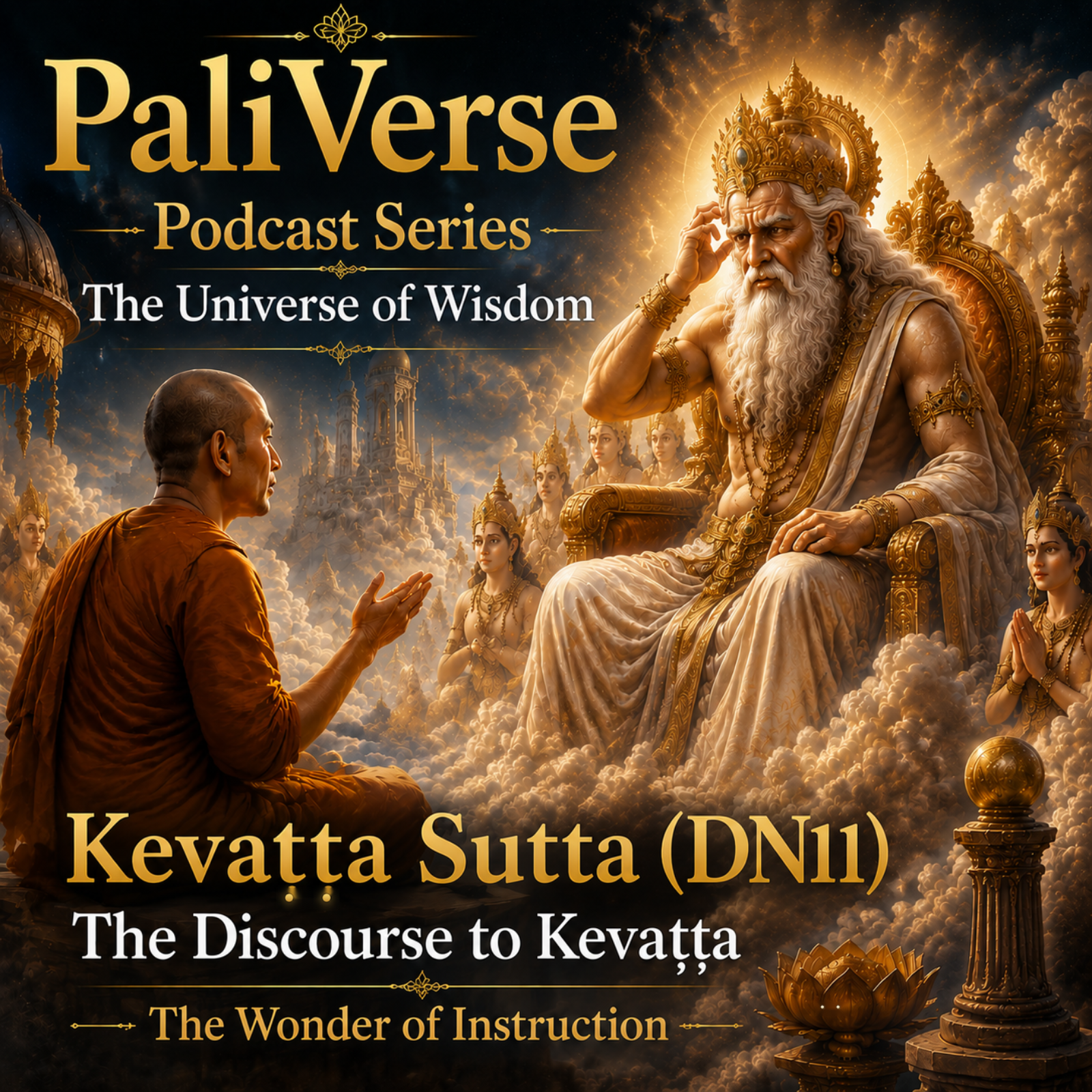
Kevaṭṭa Sutta (DN11): The Discourse to Kevaṭṭa — The Wonder of Instruction
If you saw a man rise into the air, pass through a wall, and touch the sun with his hand — would you believe his teaching? Be honest. Most of us would.That is exactly what a rich young householder was counting on when he came…
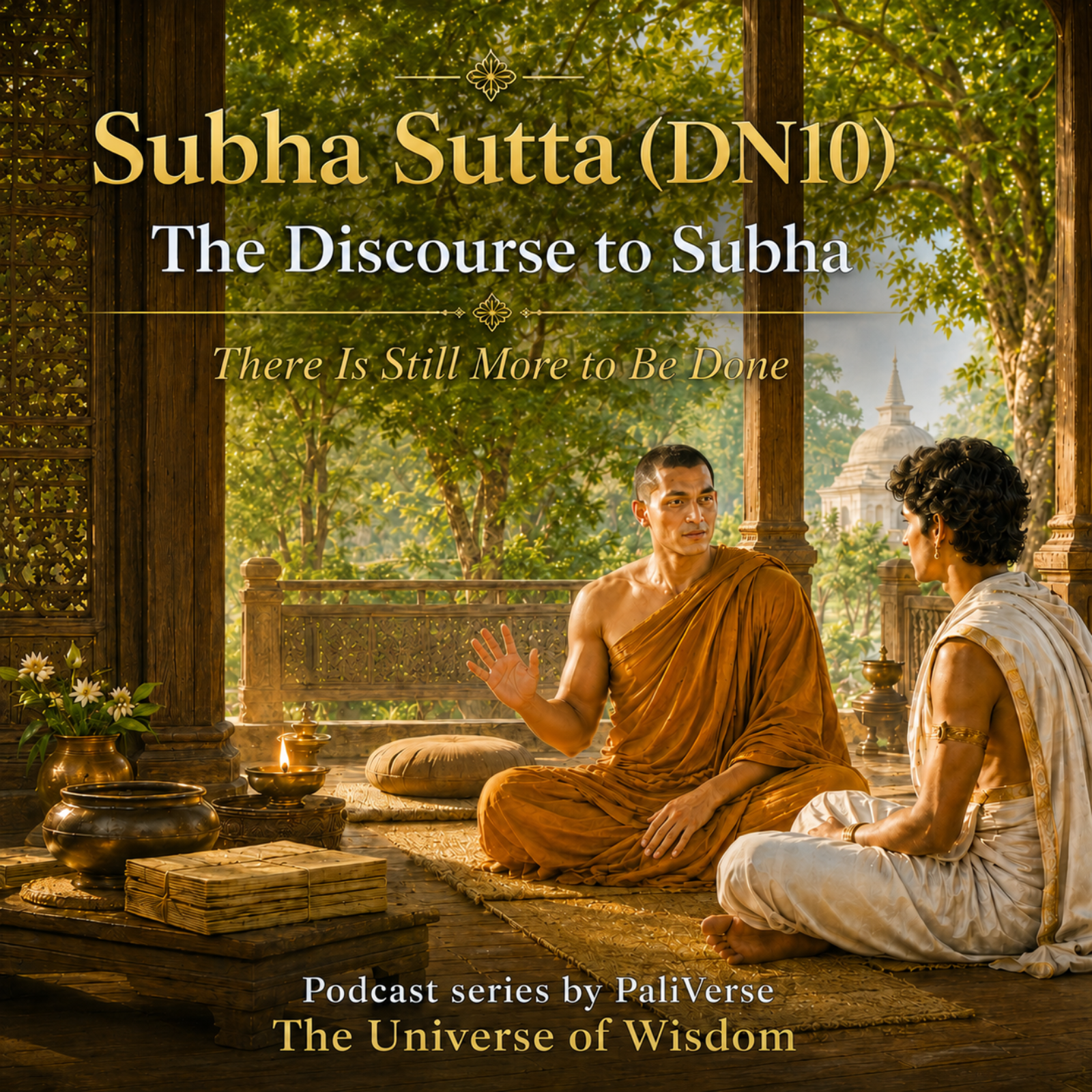
Subha Sutta (DN10): The Discourse to Subha — There is Still More to Be Done
The Buddha has died, and his passing is recent. A young brahmin named Subha, in the city on business, sends word to Ānanda — the attendant who stayed closest to the Teacher through his life — and asks to see him. When Ānanda comes, Subha…